Supporting every child’s journey to becoming a writer.
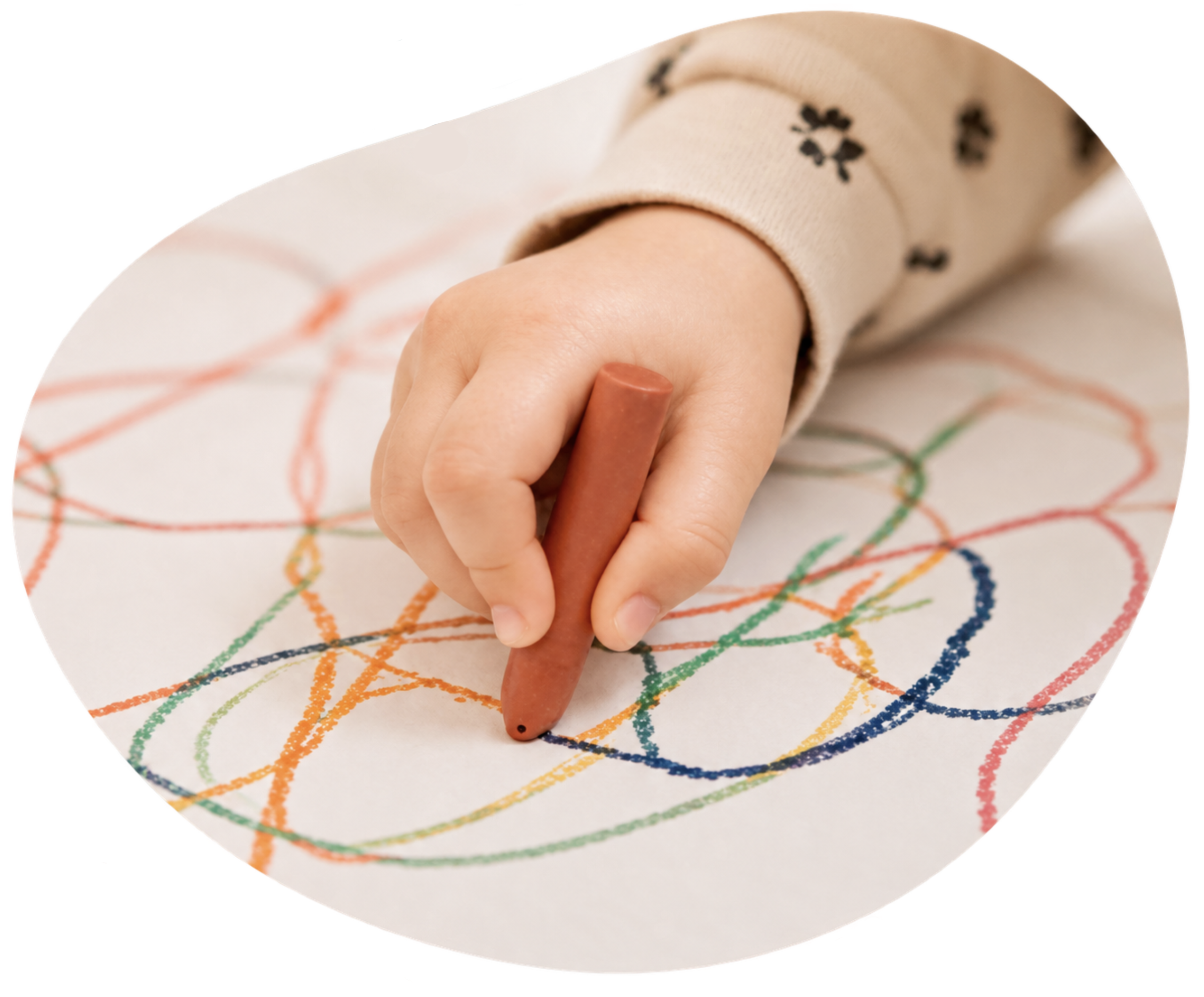
Writing begins long before letters appear on a page.
Writing Pathways is a research-informed space for educators who want to understand how writing develops — from the earliest movements, marks, meanings and messages through to increasingly conventional writing.
Explore the development behind the finished product, understand what you’re seeing, and consider how you can support what comes next.
[Explore writing development]
Explore writing development
Browse key areas of early writing development.
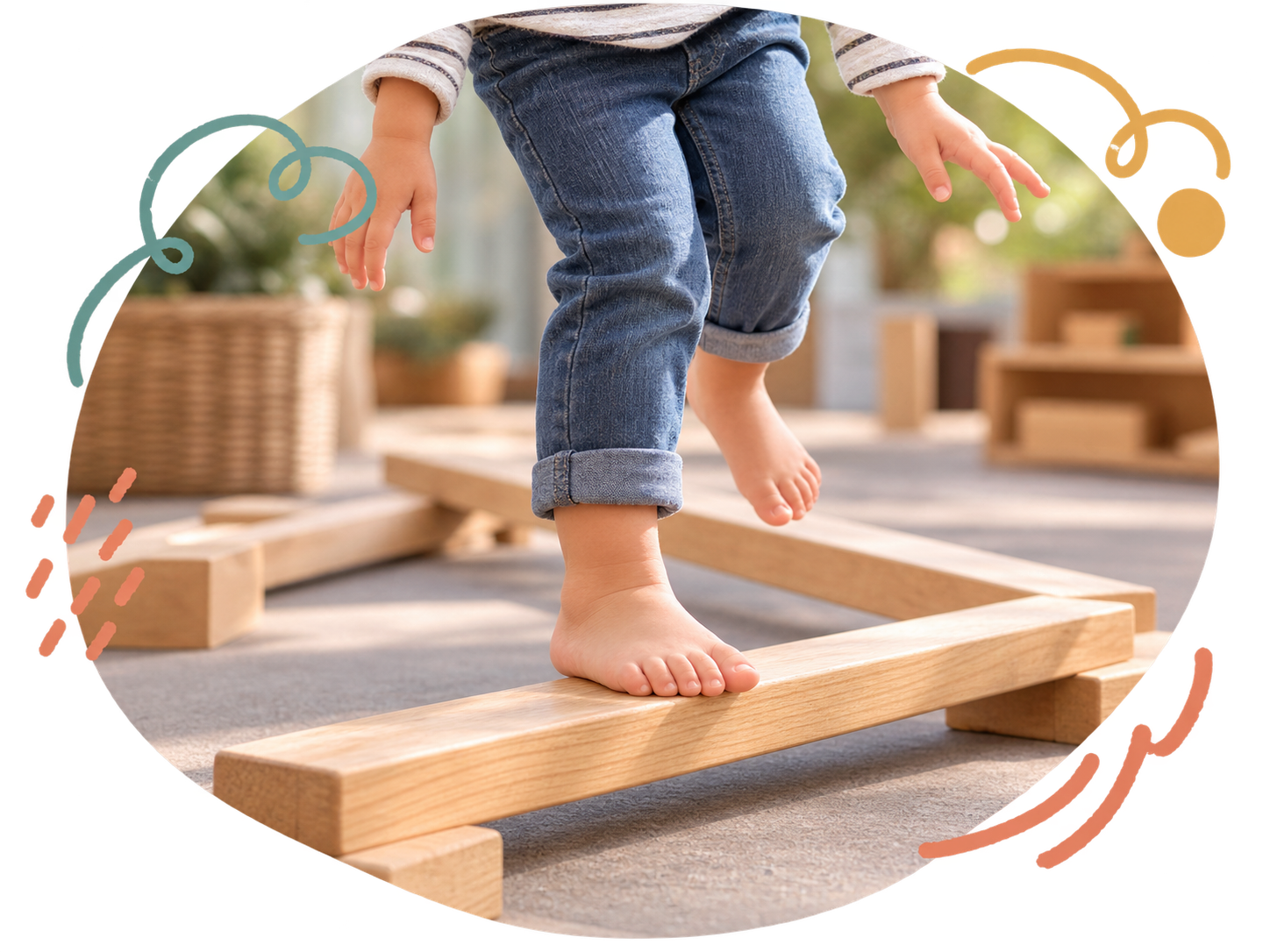
Physical development
Explore how movement, stability, coordination, body awareness and motor control work together to support children’s developing ability to write.
→

Mark-making
Understand how children move from exploring the effects of movement to making increasingly intentional and meaningful marks.
→
Emergent writing
Explore the fascinating space between early mark-making and conventional writing — where marks begin to represent ideas, language and meaning.
→
Transcription
Explore how children begin to turn spoken language into written form through handwriting, sound–letter knowledge and early spelling.
→
Composition
Writing starts with having something to say. Explore how ideas, language, storytelling and purpose come together to shape meaningful written messages.
→
Writer Identity
Explore how confidence, choice, purpose and relationships influence children’s willingness to write and their developing sense of themselves as writers.
→
Look beneath the writing
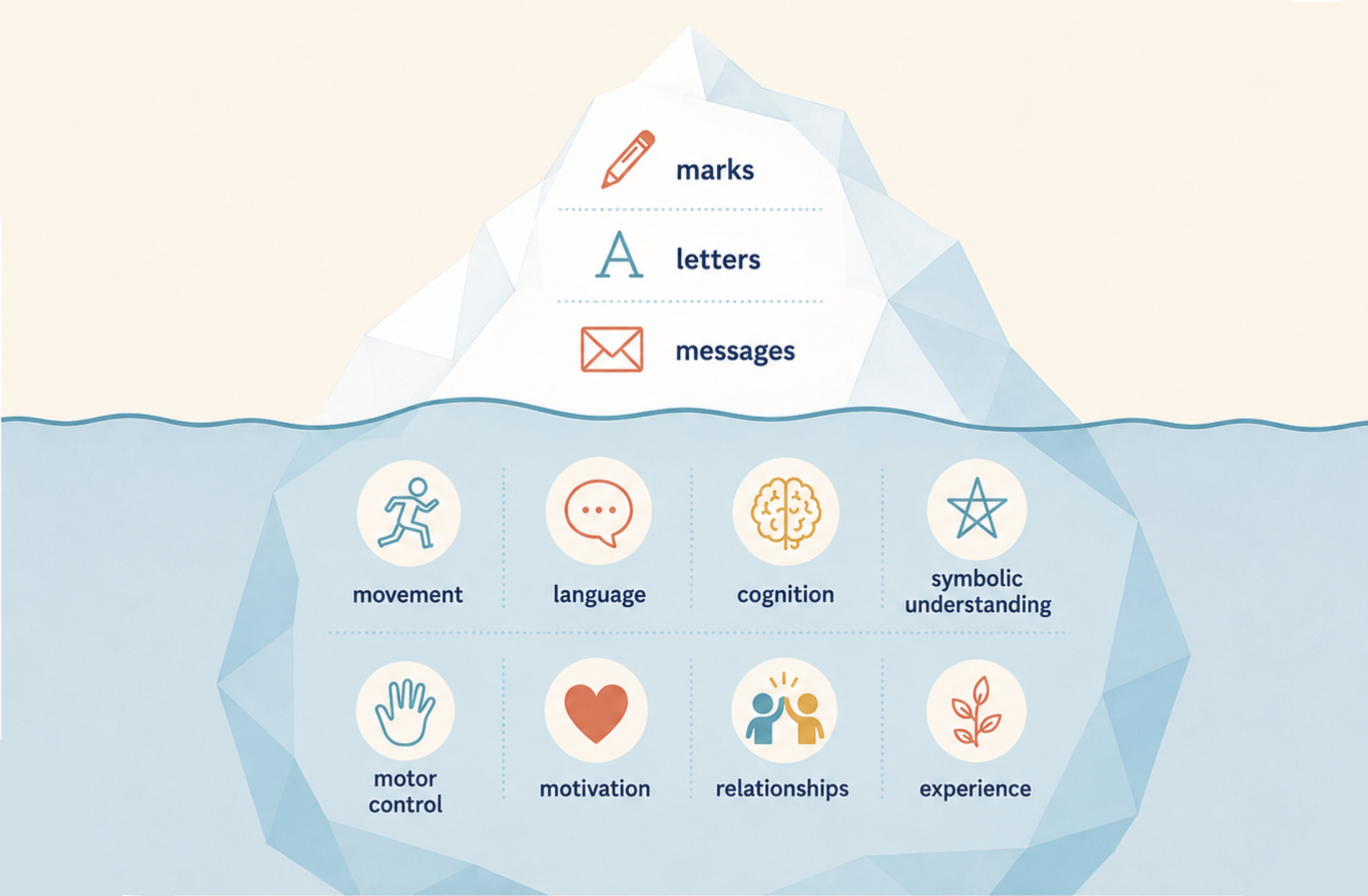
What we see on the page is only the surface.
Writing development is a complex, interconnected process involving the body, the brain, language, emotions, relationships and experience.
Our pathways help educators look deeper, understand more clearly and support children more effectively.
Understanding Individual Pathways
Every child’s journey into writing looks different. Our pathways approach helps educators understand variation, notice what is happening beneath the surface, and respond without assuming that all children should follow the same route.
Your content goes here. Edit or remove this text inline or in the module Content settings. You can also style every aspect of this content in the module Design settings and even apply custom CSS to this text in the module Advanced settings.
Your content goes here. Edit or remove this text inline or in the module Content settings. You can also style every aspect of this content in the module Design settings and even apply custom CSS to this text in the module Advanced settings.